“Active, hands-on learning stimulates multiple parts of the brain at once—visual, kinesthetic, auditory—which improves retention, recall, and comprehension.“
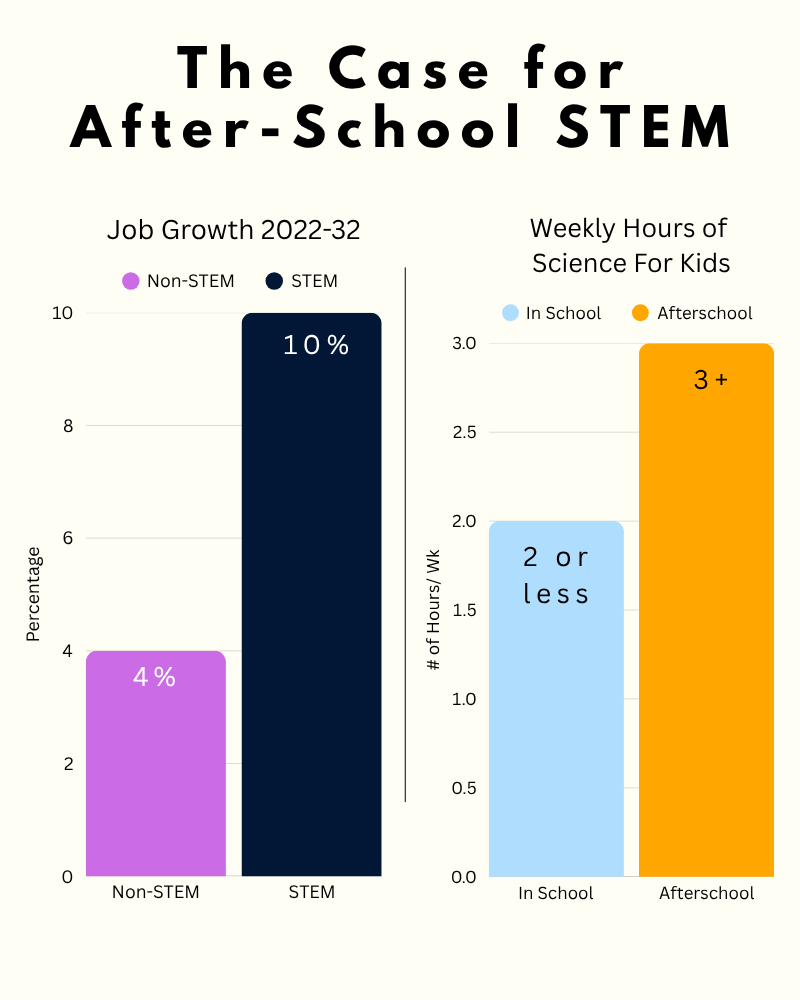
Only 33% of 8th graders in the U.S. are proficient in science. Meanwhile, schools are averaging just two hours or less of science instruction per week in elementary classrooms, according to the National Assessment of Educational Progress. In a world defined by innovation, are we doing enough to prepare our kids for the future?
It’s not just about getting into a good college. It’s about equipping our children with the skills they need to succeed in a world powered by technology, science, and innovation. If we want future leaders who can tackle complex challenges—from cybersecurity to the environment—we need to start building those skills early. And we need to do it in a way that sticks.
That’s where after-school STEM programs come in. Research published in the International Journal of STEM Education found that hands-on, STEM-focused after-school programs significantly improved student engagement, career interest, and 21st-century skills including problem-solving, communication, and teamwork.
STEM = Opportunity
STEM (Science, Technology, Engineering, and Math) education creates a foundation for problem solving and lifelong learning, and it’s a pathway to a good career. According to the U.S. Bureau of Labor Statistics, STEM jobs are projected to grow by 10% from 2023 to 2033, compared to just 4% for non-STEM jobs. These careers offer not only higher salaries, but also greater stability and societal impact.
The high demand for individuals with a STEM education will remain the same, if not increase, and the significance of STEM education cannot be overstated. It has even been considered a matter of national security. During the Cold War, President Eisenhower pushed for the National Defense Education Act in response to Sputnik, highlighting the strategic importance of scientific literacy. Today, the same holds true.
Why Early Exposure Matters
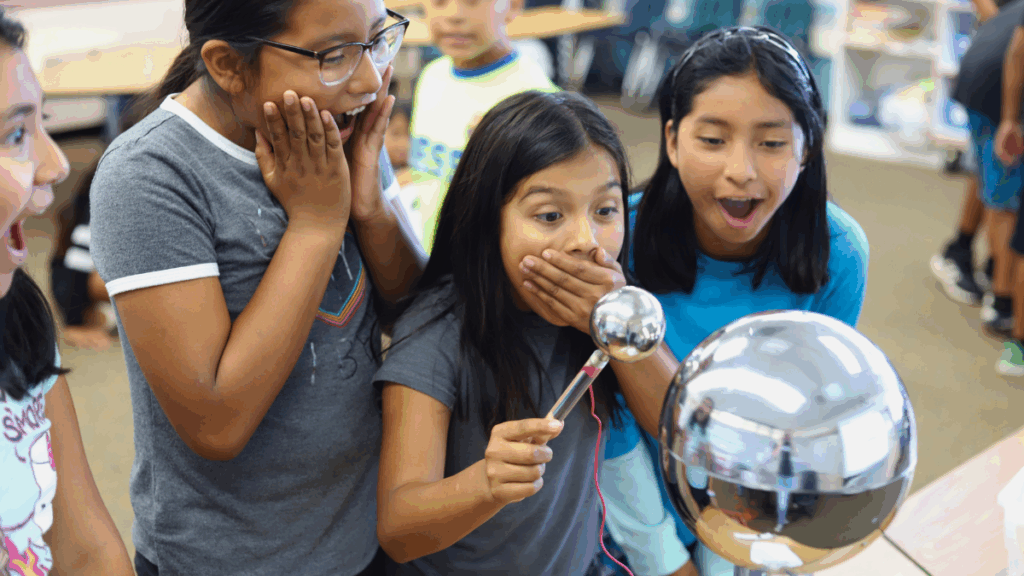
According to the International Journal of STEM Education, the earlier a child is exposed to STEM, the more likely they are to pursue STEM careers. This makes sense because they are able to build confidence in science subjects from being exposed to it for longer. In addition, active hands-on learning stimulates multiple parts of the brain at once – visual, kinesthetic, auditory – which improves retention, recall, and comprehension, according to the National Academies Press. A study in Frontiers in Psychology found that students in hands-on environments outperformed peers in traditional settings in both test scores and long-term understanding.
At the same time, however, most elementary and middle school teachers lack the training or time to deliver hands-on science. In fact, only 17% of elementary and 46% of high school science teachers report being able to teach hands-on STEM effectively.
This leaves a critical gap.
What Makes LabRats Different
LabRats San Diego fills that gap by offering:
-
Real Scientists: Our instructors hold science degrees from top universities like Stanford, Berkeley, and UCSD.
-
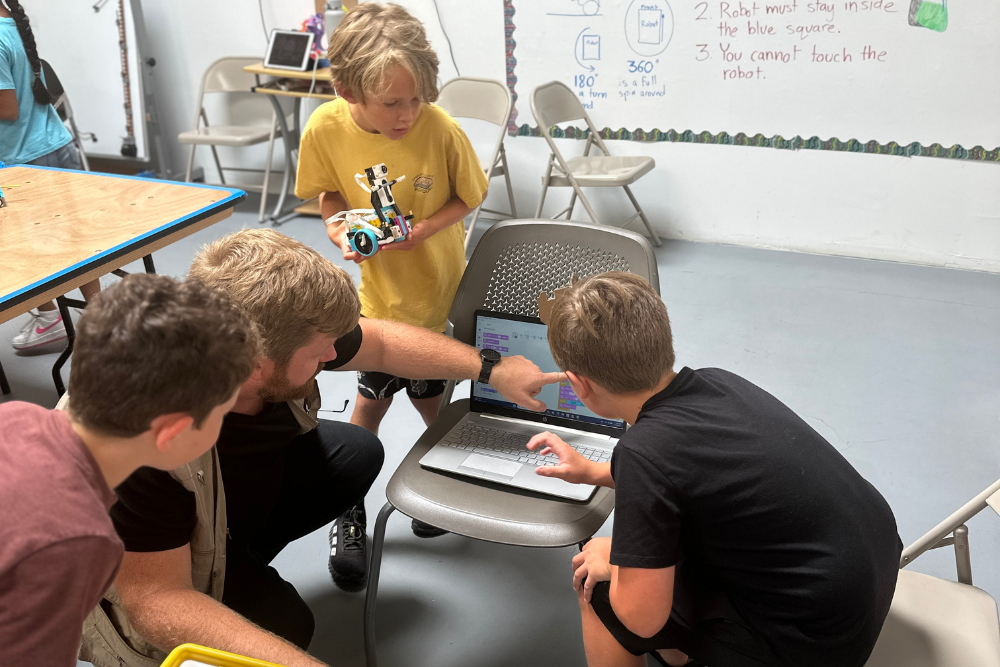
Learning Disguised as Fun: Kids launch rockets, create chemical reactions, and build robots without realizing they’re learning real STEM.
-
Hands-On Every Day: No lectures or worksheets. Just curiosity, creativity, and experimentation.
-
Confidence Through Creation: Kids leave proud of what they’ve built; not just what they’ve learned.
We design our curriculum to support all learning styles and spark real-world understanding. Most importantly, we make science feel like play.
Our mission? To make high-quality, hands-on STEM education accessible, fun, and impactful for every child—regardless of their zip code.
The Lifelong Benefits of STEM Education
STEM isn’t just for future scientists or engineers. The skills developed through STEM activities—like critical thinking, problem solving, and collaboration—are foundational for success in virtually any field.
According to a report from the National Research Council, students engaged in STEM programs demonstrate increased persistence, improved reasoning skills, and greater confidence in tackling complex problems.
Moreover, a 2018 study published in the International Journal of STEM Education found that early exposure to STEM principles helps students build essential skills such as communication and cooperation, which are highly transferable to careers in business, healthcare, law, education, and beyond.
By learning how to think analytically, work through challenges, and collaborate with peers, students are being prepared not just for exams, but for life. These are the tools society needs to thrive in a fast-paced, tech-driven, hyper-competitive world.
And let’s be real: Parents love it when their kids come home excited about what they made, discovered, or solved.
In Conclusion
After-school science enrichment isn’t a luxury. It’s a necessity.
STEM skills are the building blocks of the future; for your child, your community, and your country.
Start early. Start with LabRats.
Visit sdlabrats.org to learn more or register for our upcoming programs. Contact us at (760) 450-4717 or at [email protected].
Because the best way to prepare for the future is to build it!