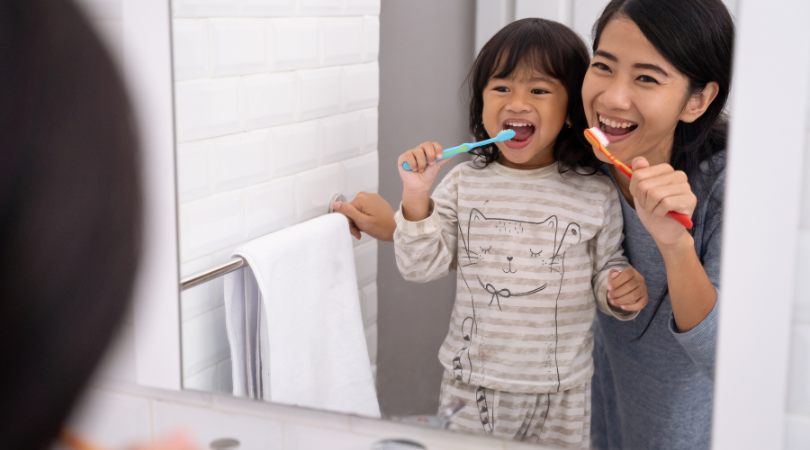
Dr. Breanne Reid, dentist at Great Smiles Pediatric Dentistry & Orthodontics, regularly shares her extensive dental knowledge with our North County families. This month, Dr. Brea discusses the trending topic of fluoride and fluoride alternatives in the prevention of cavities.
How cavities form
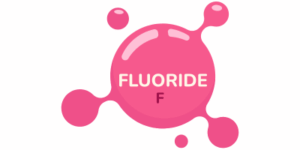
We all want to avoid cavities! Do you know how they form? Cavities begin when bacteria present in the mouth feed on sugars and fermentable carbohydrates that we eat. They then digest the sugars and carbohydrates and release acid. These acids gradually break down enamel, leading to loss of the natural minerals in the tooth via a process called demineralization. If left unchecked, the enamel becomes porous, weak, and eventually a cavity forms!
Fluoride
When we think about preventing cavities and protecting our teeth, fluoride is usually the mineral that comes to mind.
The American Academy of Pediatric Dentistry recognizes that drinking fluoridated water (at a level of 0.7ppm) and brushing with fluoridated toothpaste twice daily are the most effective methods in reducing dental caries prevalence in children.
Fluoride has been shown to be safe and effective in small doses. The recommended dose is 0.7ppm in the water and a pea-size amount of toothpaste on the toothbrush for children age 3 and older.
Fluoride acts in three important ways to prevent caries:
1) Strengthens enamel through creation of fluorapatite.
2) Remineralizes weakened enamel.
3) Disrupts bacteria’s metabolism & reduces acid.
Alternatives to fluoride
Despite many documented, peer-reviewed studies that support the use of fluoride, some may choose to avoid fluoride.
What are some alternatives that you can use to protect your child’s teeth?
There have been scientific, well-controlled studies that show there are other options! The Journal of Pediatric Dentistry included an article “In Vitro Effects of Three Fluoride-Free Pastes on Remineralization of Initial Enamel Carious Lesions” by Biria DDS, Mac et al.
In the study they used three fluoride-free pastes on extracted, demineralized teeth and then tested the hardness of them after 30 days.
The three different pastes contained the following:
1) nanohydroxyapatite
2) casein phosphopeptide-amorphous calcium phosphate
3) calcium sodium phosphosilicate
Each of the three pastes significantly remineralized the incipient (very minor) enamel lesions after 30 days!
How does hydroxyapatite prevent cavities?
It remineralizes the weakened enamel by filling in microscopic cracks and weak spots on enamel, making teeth smoother, stronger, and more resistant to acid attack. It is biocompatible and safe since it’s the same mineral that teeth are naturally made of! Additionally, it is safe to swallow (in small doses) and non-toxic. The great news is that many toothpastes are available that contain hydroxyapatite instead of fluoride. It is an excellent choice for children, pregnant women, and anyone sensitive to fluoride!
Dr. Brea welcomes new patients into her combined pediatric dentistry and orthodontic practice. With locations in both Solana Beach and Carlsbad, the offices are fun destinations for kids to visit despite the serious focus on dental health. First visits for children under two years are complimentary at Great Smiles Pediatric Dentistry and Orthodontics.
Here are a handful of recent dental topics from Great Smiles PDO & Dr. Brea on The North County Moms:
Help! I’m nervous for my child’s first dental visit!
How to Brush Your Child’s Teeth
Teens & Teeth — Advice for Parents from Dr. Brea
Scroll through more blog content from Dr. Brea & Great Smiles on TNCM!