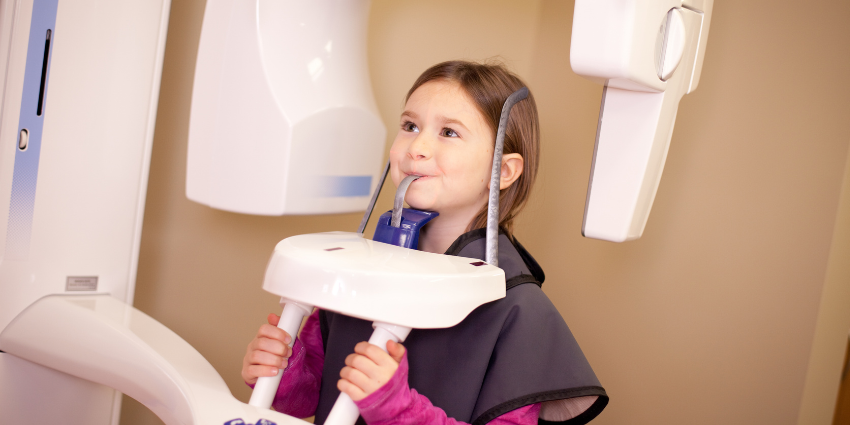
Why dental X-rays are important
Dr. Breanne Reid, pediatric dentist at Great Smiles Pediatric Dentistry & Orthodontics, with offices in Solana Beach and Carlsbad, explains why parents should understand the effectiveness of dental X-ray technology when prioritizing their children’s dental health.
X-ray technology has provided immeasurable diagnostic benefits to the medical and dental community. Doctors can now identify and prevent the progression of disease at earlier stages. In dentistry, this means we can “catch” a cavity in its early stage and provide preventive therapies and avoid a dental restoration all together! With the development of digital imaging technology, the amount of radiation exposure in routine dental x-rays are now considered negligible.
A comparison of our daily natural environmental radiation exposure with the amount of radiation in dental x-rays will help in understanding the risks and benefits encountered during your child’s routine dental check-ups.
According to the National Council on Radiation Protection and Measurements, the average American receives an effective dose of 3 millisieverts (mSv) per year from naturally occurring radioactive materials and cosmic radiation from outer space. Naturally occurring radioactive materials can be found in the air that we breathe and the food that we eat. Cosmic radiation is that which we receive from the sun in the form of UVA/UVB wavelengths.
For a child who is in their primary dentition and has not yet lost their first baby tooth, the dental x-rays indicated by the American Academy of Pediatric Dentistry (AAPD), are two bitewings and two periapicals. The total amount of radiation for this set is 0.008 mSv. If a child has one or more adult teeth then a panoramic x-ray is indicated to check on growth, development, missing or extra teeth, tumors or other pathology in the jaw. The amount of radiation exposure in a single panoramic x-ray is 0.007 mSV.

Below are comparisons of effective radiation dose with naturally-occurring environmental radiation exposure:
Procedure/Source of Exposure |
Approximate Radiation Dose |
Comparisons of Natural Environmental Radiation |
Additional Lifetime Risk of
|
| CT Head Scan | 2 mSv | 8 months | Very Low |
| Mammography | 0.4mSv | 7 weeks | Very Low |
| Chest X-ray | 0.1 mSv | 10 day | Negligible |
| Coast to coast flight in a commercial airplane | 0.03 mSv | * | * |
| 2 bitewing and 2 periapical dental x-rays | 0.008 mSv | 1 day | Negligible |
| Panoramic X-ray | 0.007 mSv | 1 day | Negligible |
American Academy of Pediatric Dentistry recommendations
Risk factors for tooth decay
Best practices for parents
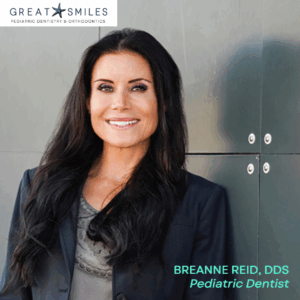
Dr. Brea welcomes new patients into her combined pediatric dentistry and orthodontic practice. With locations in both Solana Beach and Carlsbad, the offices are fun destinations for kids to visit despite the serious focus on dental health. First visits for children under two years are complimentary at Great Smiles Pediatric Dentistry and Orthodontics.
Here are a handful of recent dental topics from Great Smiles PDO & Dr. Brea on The North County Moms:
Spring Into Sports & Get Kids in the Game with the Right Protection
Fluoride vs Hydroxyapatite — What’s the best toothpaste for my child?
Teens & Teeth — Advice for Parents from Dr. Brea
Scroll through more blog content from Dr. Brea & Great Smiles on TNCM