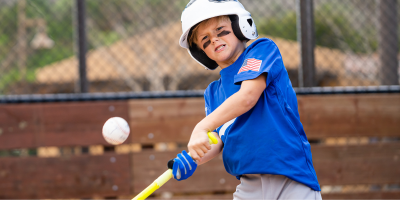
It is time for skateboards and scooters, baseball and bicycles, pool parties and more… and unfortunately an increase in tooth trauma. We commonly see fractured teeth in all of the above activities and more! While we can’t completely protect our children from every potential accident, an ounce of prevention in this case is definitely worth a pound of cure.
Helmets protect
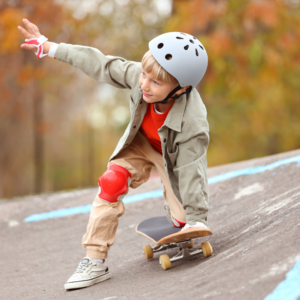
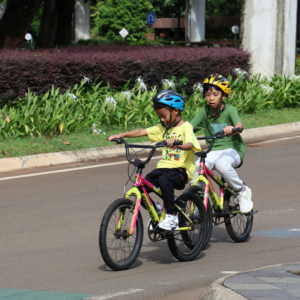
One of the easiest and most effective trauma prevention tools is the proper use of a well fitting helmet. Since 1993 helmets have been required by law for all children in the state of California under the age of 18 when riding bikes, e-bikes, scooters and skateboards.
You can test your child’s helmet by snapping it snuggly under the chin (watch not to pinch!) and hitting the front of the helmet with the palm of your hand. The helmet should stay in place. If it does, then it will protect not just the skull, but also the face if there is a face forward fall on the pavement.
Mouthguards
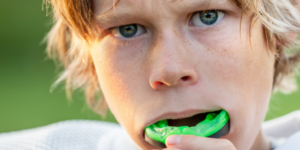
Another effective trauma prevention tool is wearing a mouthguard for contact sports such as football, basketball, soccer, lacrosse, water polo, etc. Often times, the boil and bite ones are effective. If you have any questions about the fit of a mouthguard, you can always bring it to our office and we can evaluate it.
When accidents happen
If an unavoidable accident does happen, and the mouth is injured, there a few things you can do to help your child recover more quickly and completely. Most importantly, verify that your child is otherwise healthy after the accident and that their mouth or teeth are the only areas involved.
If after the accident your child suffered a loss of consciousness, nausea, dizziness or vomiting please call your pediatrician or 911 immediately. Also, if you feel your child has a broken jaw or their mouth moves to one side or the other when they open, please take them directly to the emergency room.
Tooth avulsion (Displacing a tooth)

The most time critical situation involving a tooth trauma is when a permanent tooth is knocked out of the socket, known as a tooth avulsion. If this happens to your child, grab the tooth by the crown (tip of the tooth) and place it back in the socket immediately. Do not scrub the tooth! If there is debris, it sounds gross, but they can lick it clean with their saliva. The tissue that is still alive on the root of the tooth is the most important thing in determining the success of the tooth’s survival.
Minutes do matter in this situation, and getting the tooth back in the socket within 20 minutes will give the tooth the best chance of survival. If you don’t feel comfortable placing it back in the socket, then place it into a cup, container or zip lock bag with their saliva saturating the tooth! Your dentist can place the tooth back in the socket if you have not done so and then splint it to help stabilize it.
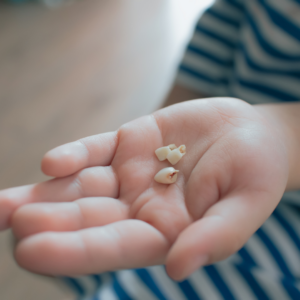
On young permanent teeth the nerve of the tooth can sometimes heal and remain healthy. On older children, a knocked out tooth will often need a root canal to remain healthy, but the dentist will evaluate each situation individually.
Knocked out primary (baby) teeth are never re-implanted in the socket, but it is still important to call your dentist soon after the trauma to evaluate if any follow up care is needed. If a baby tooth is lost, your dentist can make a retainer like appliance that can replace the missing tooth for cosmetic reasons if it is desired by the parents and depending on the age of the child.
Broken front tooth
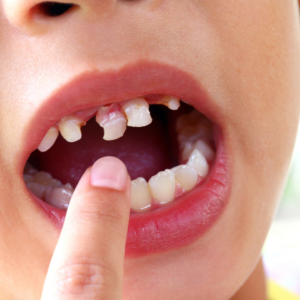
A broken permanent front tooth is probably the most likely dental trauma your child may suffer. The first thing to do if this happens, is to try to find the pieces. If the tooth fractured cleanly, and in a large enough piece, it can often be re-bonded back together.
Do not be overly concerned if you cannot find the pieces. Your dentist can use composite resin to replace the missing portion of the tooth that is color matched to your child’s tooth. When done correctly, most people have a hard time recognizing a tooth has been fractured and repaired.
If the nerve of the tooth is exposed during a trauma, your dentist can often prevent the need for a root canal by placing a special material over the nerve called MTA.
In conclusion
When trauma occurs, please use this information to help improve your child’s chances of a full and healthy recovery. Parents who instruct kids to use preventative measures usually keep children out of harms way. However, when accidents occur, we’re fortunate that the use of modern materials and techniques in dentistry have revolutionized treatment.
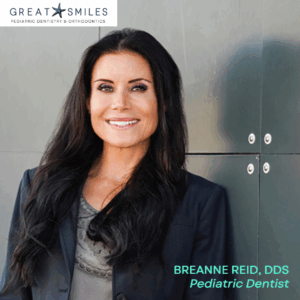
Dr. Brea welcomes new patients into her combined pediatric dentistry and orthodontic practice. With locations in both Solana Beach and Carlsbad, the offices are fun destinations for kids to visit despite the serious focus on dental health. First visits for children under two years are complimentary at Great Smiles Pediatric Dentistry and Orthodontics.
Here are a handful of recent dental topics from Great Smiles PDO & Dr. Brea on The North County Moms:
Mouth Taping and Why It’s Trending
Fluoride vs Hydroxyapatite — What’s the best toothpaste for my child?
Teens & Teeth — Advice for Parents from Dr. Brea
Scroll through more blog content from Dr. Brea & Great Smiles on TNCM